

Risk Management
2023 Digest (Vol 33 No 1)
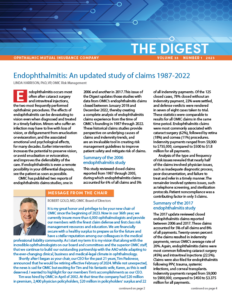 Endophthalmitis occurs most
often after cataract surgery and intravitreal injections, the two
most frequently performed ophthalmic procedures. The effects of
endophthalmitis can be devastating to vision even when diagnosed
and treated in a timely fashion... Read article in the
Digest.
Endophthalmitis occurs most
often after cataract surgery and intravitreal injections, the two
most frequently performed ophthalmic procedures. The effects of
endophthalmitis can be devastating to vision even when diagnosed
and treated in a timely fashion... Read article in the
Digest.
SEMINARS:
CASE STUDY:
When you are diagnosing endophthalmitis, the sooner the better
Delay in diagnosis of endophthalmitis OS following bilateral strabismus surgery resulting in HM OS and phthisis bulbi in a 5-yearold child ends in settlement with plaintiff for $850k. Read the case study in the Digest.
Risk Management > Directory
Risk Management Hotline:
(800) 562-6642 (Press 4)
Course and Discount Information:
(800) 562-6642 (ext. 652)
Risk Management Hotline:
(800) 562-6642 (Press 4)
Course and Discount Information:
(800) 562-6642 (ext. 652)
Recent Articles
2022 Digest (Vol 32 No 1)
Take Time Out
HOTLINE:
Support your ophthalmic society and reduce your OMIC premium
Visit OMIC's website and sign into your MyOMIC profile to update your current active society memberships. OMIC has partnerships with most ophthalmic societies in the United States. Simply check the box of any societies you maintain a membership in at least 60 days prior to your renewal date for the discount to be automatically applied. A maximum of 5% in society partner discounts is available per policy year.